
A leaking gutter or an open mortar joint is easy to overlook when the weather is dry. As autumn rain arrives, those small defects deserve closer attention.
Preparing your home’s façade for winter starts with understanding its condition. Where does rainwater go? Are the mortar joints sound? Have cracks or damp patches changed since last year?
For London homeowners planning façade and pointing maintenance before winter, the priority is to identify water-entry problems and arrange appropriate repairs. Repointing the whole property is not automatically necessary: Historic England advises retaining sound historic mortar and concentrating on areas that need attention.
This checklist will help you organise an initial inspection and decide what to discuss with a professional.
1. Start With a Ground-Level Inspection
Walk around the accessible sides of your property in daylight. Look at the front elevation, rear walls, side passages and the junctions between the original house and any extensions.
Photograph anything that appears damaged or unusually damp. Record the location and date so you can compare it after rain or at your next inspection.
Look for:
- Missing or deeply eroded mortar.
- Cracked or flaking brick faces.
- Staining beneath gutters and window sills.
- Cracks around openings or between building sections.
- Damaged render or peeling exterior finishes.
Historic England’s maintenance checklist provides a useful framework for inspecting external walls, roof details and rainwater systems.
Keep your inspection at ground level. Arrange suitable professional access for chimneys, parapets and other high areas rather than trying to investigate them yourself.
2. Check Gutters and Downpipes Before Repointing
A wall repeatedly soaked by an overflowing gutter needs the drainage defect addressed. Replacing mortar alone will leave the source of the problem in place.
From a safe position during rainfall, look for water spilling over gutter edges, escaping through joints or running down the outside of a downpipe. Check whether water is collecting around the base of the building.
Arrange for leaves and debris to be cleared, and have damaged fittings repaired. The SPAB’s guidance on rainwater fittings explains the importance of maintaining gutters and downpipes, including defective joints.
If the same patch of masonry stays wet after the surrounding wall dries, note it for further investigation. Its position may help a contractor identify where water is entering.
3. Assess the Mortar Joints
Pointing is the exposed mortar between bricks or stones. Its condition matters, but a slightly weathered appearance does not necessarily mean it has failed.
Pay attention to open gaps, very loose material and joints that have weathered deeply. Avoid scraping out mortar to test it.
Traditional lime mortar is relatively soft by design. The SPAB specifically advises that softness alone does not justify repointing, and that uneven weathering often calls for localised repairs.
For a more detailed explanation of visible warning signs, read our guide to signs your property needs repointing.
Ask for an assessment that identifies which sections need work, why they have deteriorated and which sound areas can remain untouched.
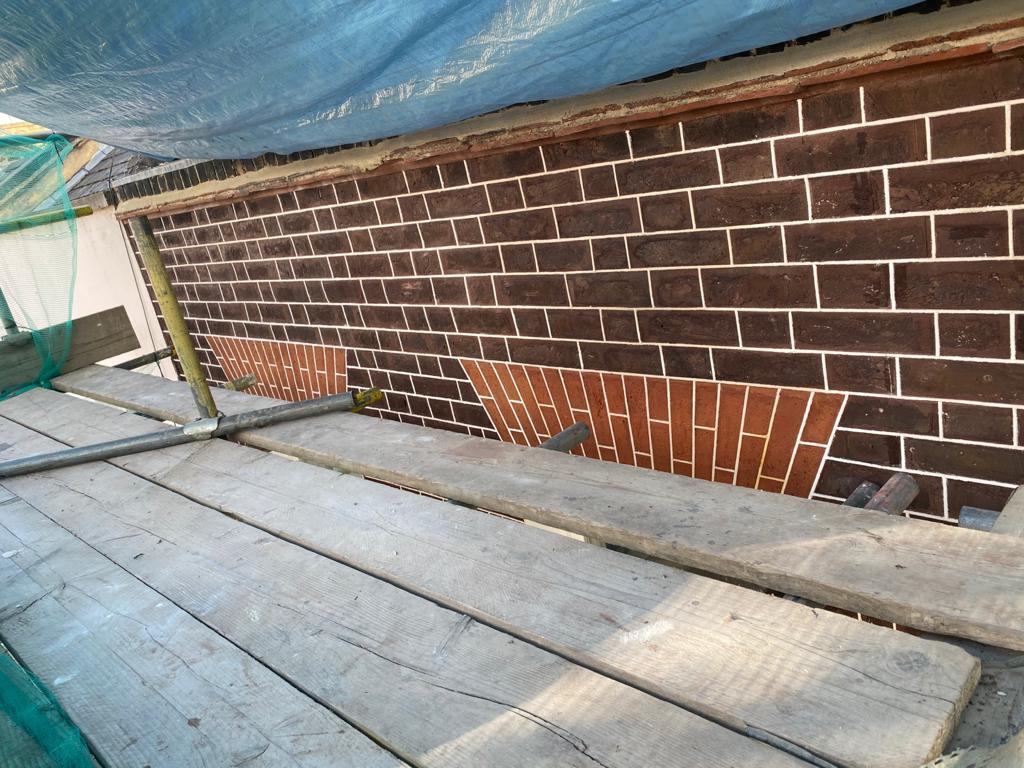
4. Investigate Damaged Bricks and Changing Cracks
Flaking brick faces, fractured masonry and cracks should be assessed alongside the mortar.
Moisture trapped in masonry can contribute to frost damage. Historic England explains that freezing conditions can cause the faces of saturated soft bricks or stone to break away.
Do not assume that every crack can be resolved by filling or repointing it. New or widening cracks, bulging walls and visible movement need professional investigation. Historic England’s advice on repairing older walls recommends structural advice where cracking, bulging or leaning suggests a more serious problem.
Keep dated photographs, but do not postpone an assessment where masonry appears unstable.
5. Include Render, Window Surrounds and Roof Junctions
A façade inspection should cover more than exposed brickwork.
Look for cracked render, blistering paint and staining around window heads and sills. From ground level, check for obvious displacement of flashings where roofs meet walls.
Historic England includes damaged render, missing pointing, staining and displaced flashings among the defects homeowners should look for during routine inspections.
Avoid treating a fresh coat of paint as the solution to an unexplained damp patch. Establish the cause first. On traditional walls, the choice of coating also matters: some surfaces require compatible, vapour-permeable finishes that allow moisture to escape.
Our pointing and façade renovation services cover the exterior work you may need to discuss following an inspection.
6. Check the Base of the Building
Leaves, stored items and vegetation can hide problems at the bottom of a wall. Clear enough space to inspect it and ensure existing ventilation openings are unobstructed.
Look for persistent wet patches, overflowing gullies and water collecting against the building. Avoid piling soil, planters or materials against air bricks.
The SPAB recommends regular preventative maintenance and keeping a building logbook to record observations and work undertaken. This makes recurring drainage problems easier to recognise.
A short record is enough: photographs, the date, the weather and what changed after repairs.
7. Choose Repairs That Suit the Building
Older London houses need materials compatible with their existing construction.
Hard cement pointing can cause problems when used with softer historic masonry. However, removing it aggressively may cause further damage. The SPAB recommends assessing whether removal can be achieved safely rather than automatically stripping it out.
Before agreeing to repointing, ask about the proposed mortar, joint finish and preparation method. For a prominent elevation, a sample panel can help establish the appearance before larger areas are treated.
Historic England’s repointing guidance explains why unsuitable work can affect both the durability and character of older masonry.
8. Allow for Suitable Weather and Protection
Booking repairs before winter gives you time to assess the building and plan the work. It does not mean every autumn day provides suitable conditions.
Fresh mortar needs appropriate protection while it hardens. The SPAB’s cold-weather guidance advises avoiding lime mortar work during periods of frost risk where possible and protecting new work appropriately.
Ask your contractor how weather could affect the programme and how completed work will be protected. If conditions are unsuitable, discuss temporary measures for urgent defects and a suitable schedule for permanent repairs.
Your Pre-Winter Checklist
Area | What to look for | Next step |
Gutters and downpipes | Overflowing water, leaks and blockages | Arrange cleaning and repairs |
Mortar joints | Open gaps and significant erosion | Request a targeted assessment |
Brickwork | Flaking faces and fractured bricks | Investigate the cause |
Cracks | New cracks, widening or movement | Seek appropriate professional advice |
Render and paint | Cracking, peeling and damp staining | Diagnose before redecorating |
Roof junctions | Visible flashing defects | Arrange a professional inspection |
Wall bases | Blocked vents and collecting water | Clear obstructions and investigate drainage |
Prepare Your London Home for Winter
Good façade maintenance starts with a clear diagnosis. Repairing a leaking gutter, treating a localised mortar defect and preserving sound brickwork can be more appropriate than committing to extensive work without an assessment.
At London’s Prestige, we can discuss your exterior renovation requirements and the areas of your property that need attention.
Contact our team to discuss pointing repairs and façade maintenance for your London home.
Frequently Asked Questions
Does my whole house need repointing before winter?
Not necessarily. Historic England advises that comprehensive repointing is rarely necessary for older buildings. The scope should reflect the condition of individual areas.
Can repointing be carried out in winter?
It depends on the materials, conditions and protection available. Lime mortar is vulnerable to frost during early hardening, so the timing needs careful assessment.
Will repointing fix an internal damp patch?
Only if defective pointing is contributing to the problem. Water may also enter through drainage defects, roof junctions or other parts of the building. Establish the source before choosing repairs.