
The brickwork of a London home can survive for generations, but the mortar between those bricks is designed to take much of the weathering.
Eventually, it begins to deteriorate.
Knowing when property repointing work is actually required can help protect the brickwork, reduce moisture problems and maintain the appearance of the building. It is particularly important with London’s older homes, where choosing the wrong mortar or unnecessarily removing sound historic pointing can do more harm than good.
Historic England specifically advises that complete repointing of an older building is rarely necessary. Often, only the elevations or areas most exposed to weather or affected by another defect need attention.
So how do you know when your property genuinely needs repointing?
What Is Repointing?
Repointing is the process of carefully removing defective mortar from the joints between bricks or stone and replacing it with an appropriate new mortar.
Mortar does more than hold masonry together.
It also helps manage moisture and accommodates small amounts of movement within the wall.
Over time, exposure to rain, wind, frost, pollution and defects such as leaking gutters can cause mortar joints to erode or fail.
A good repointing job restores these joints without damaging the surrounding masonry and should respect the original appearance of the building.
For older London properties, matching the mortar correctly is particularly important.
Quick Check: Does Your Property Need Repointing?
What you can see | What it may indicate |
Mortar crumbles when touched | Significant deterioration |
Deep recesses between bricks | Mortar has weathered away |
Visible holes or missing sections | Localised joint failure |
Cracks running through mortar | Movement or mortar failure |
Damp appearing near external walls | Possible moisture penetration |
Brick faces breaking away | Masonry may be under stress |
Hard grey mortar on an old property | Previous unsuitable cement pointing |
Failed mortar around chimney | Increased water-entry risk |
Different badly matched repairs | Previous patch repairs may be failing |
Vegetation growing from joints | Open or moisture-retaining joints |
Not every one of these signs means the entire façade needs repointing.
A proper assessment should determine why the mortar has deteriorated before deciding how much needs replacing.
1. The Mortar Is Crumbling
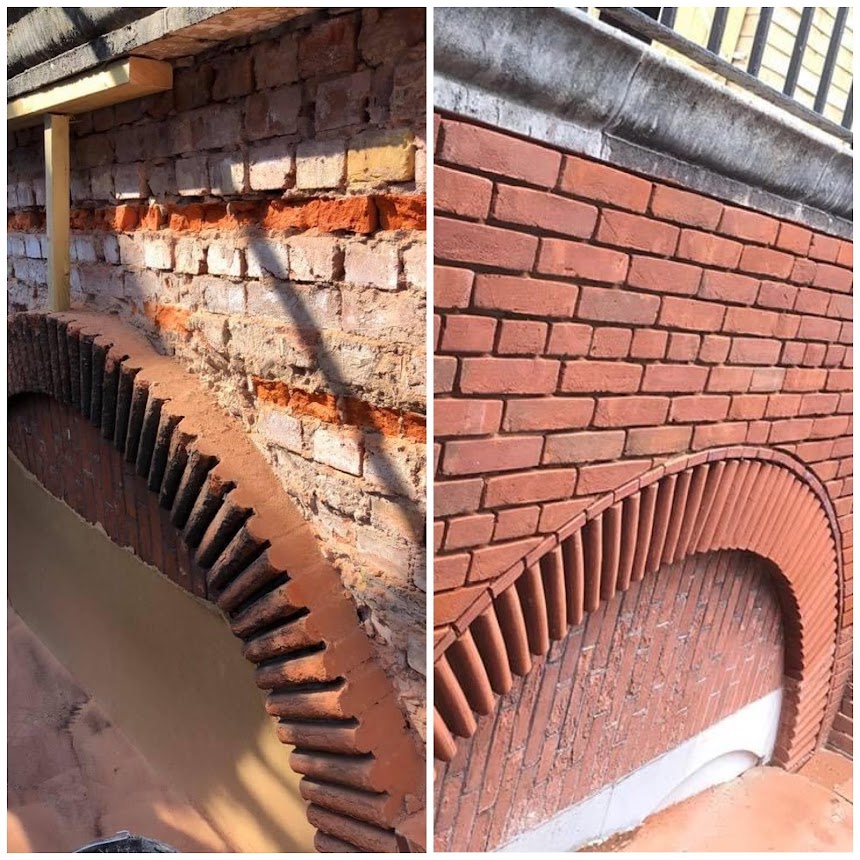
One of the clearest signs is mortar that has become soft, powdery or loose.
Try looking closely at the joints around areas exposed to weather.
If mortar is falling away naturally or can be brushed out very easily, it may no longer be providing adequate protection.
Historic England recommends retaining sound mortar and concentrating repair work on deteriorated areas rather than automatically removing every joint.
This selective approach is especially important with period properties.
Original mortar is part of the building fabric. Removing good material simply to create a uniform appearance can be unnecessary and damaging.
2. The Joints Have Receded Deeply Behind the Brick Face
Mortar naturally weathers over time.
A small amount of weathering is not automatically a problem. But when the joints become noticeably deep and recessed, the wall may be more exposed to water.
You may notice:
- Dark lines between bricks
- Deep shadows around joints
- Uneven holes
- Missing sections of mortar
- Loose material collecting below the wall
These signs justify a closer inspection.
The depth and condition of the joints should determine whether local repair or wider property repointing work is appropriate.
3. Pieces of Mortar Are Falling Out
If complete pieces of mortar are detaching from the wall, the joint has usually moved beyond normal surface weathering.
This can occur around:
- Chimneys
- Parapets
- Window openings
- Roof junctions
- Exposed corners
- Areas beneath leaking gutters or downpipes
These locations often receive more direct weather exposure.
But before replacing the mortar, the source of the problem should be addressed.
If a leaking gutter is repeatedly saturating the wall, repointing alone will not solve the underlying cause.
SPAB notes that continuous saturation from defects such as leaking gutters can contribute to serious decay of mortar joints and bricks.
4. You Can See Cracks in the Mortar
Small cracks can appear for several reasons.
Some relate to normal movement or deterioration. Others can indicate a wider building defect.
Pay particular attention when cracks are:
- Getting wider
- Running diagonally through several bricks
- Appearing around windows and doors
- Accompanied by bulging brickwork
- Reappearing after previous repair
- Passing through the bricks rather than only the mortar
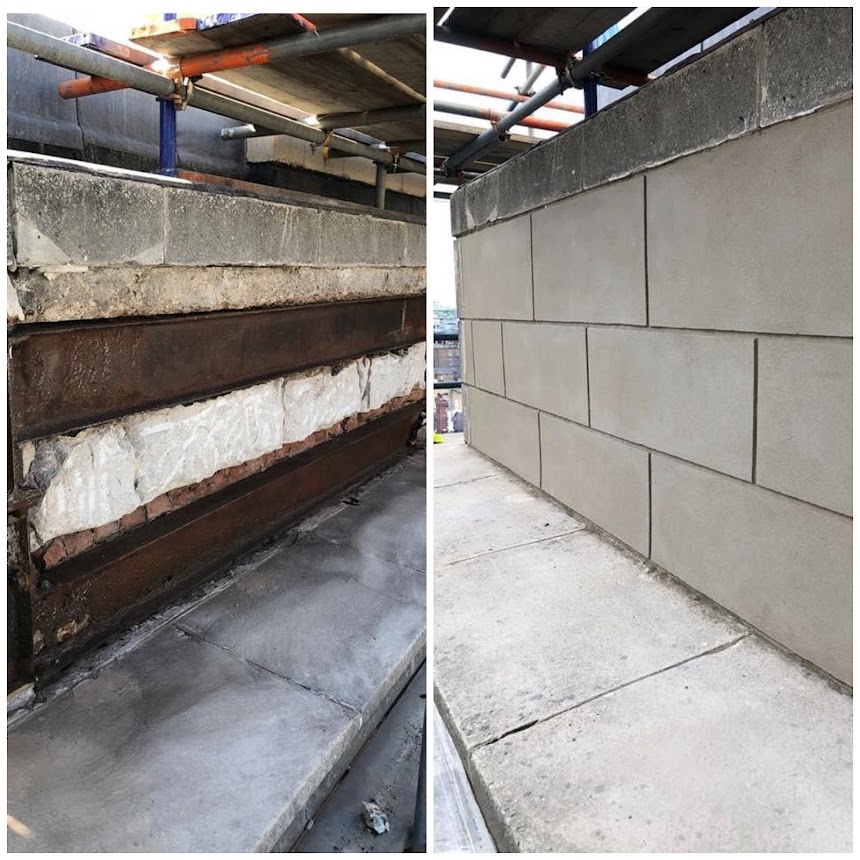
SPAB advises that cracking or bulging brickwork can sometimes result from issues such as damaged lintels, tree roots or alterations to load-bearing structures.
That means repointing should never be used simply to cover an unexplained structural crack.
The cause should be understood first.
5. Damp Is Appearing Inside Near an External Wall
Damp can have many causes.
Failed pointing is only one of them.
Before deciding that repointing is required, it is important to consider:
- Gutters and downpipes
- Roof defects
- Flashings
- Window seals
- Ground levels
- Plumbing
- Condensation
- Cracked render
- Defective chimney details
Where mortar joints are badly deteriorated, however, wind-driven rain can exploit open gaps in the wall.
If internal damp corresponds with visibly failed mortar externally, the pointing should form part of the investigation.
A professional inspection is preferable to simply applying waterproof coatings over the façade.
6. The Brick Faces Are Starting to Flake or Break Away
This is known as spalling.
The face of the brick begins to crumble, flake or break away.
One possible cause is inappropriate hard mortar.
Traditional brickwork was commonly built using relatively soft and permeable lime mortar. SPAB warns that using dense Portland cement mortar on older, pre-1919 walls can accelerate deterioration because moisture may then evaporate through the softer bricks rather than through the joints.
The brick can begin to suffer while the hard cement joint remains intact.
This is why the strongest mortar is not necessarily the best mortar.
For older masonry, compatibility is more important than maximum strength.
7. Your Old Property Has Very Hard Grey Cement Pointing
Look carefully at the mortar.
On many older London homes, original lime mortar has previously been replaced with hard cement-rich pointing.
SPAB describes unsuitable cement pointing on older buildings as typically hard, smooth and dull grey compared with the more open texture of traditional lime mortar.
However, this does not mean every section should immediately be hacked out.
Removing very hard cement from soft historic brick can itself damage the masonry.
SPAB recommends a cautious approach, potentially beginning with a trial area and retaining well-adhered pointing where removal would cause more harm.
This is exactly why older façades require assessment rather than a standardised repointing method.
8. Previous Repointing Looks Patchy or Is Failing
Poor previous repairs are easy to spot.
You may see:
- Bright grey joints against traditional brick
- Mortar smeared across brick faces
- Very thick joints
- Uneven joint profiles
- Cracks around repairs
- New mortar falling away
- Different pointing styles across one elevation
Good repointing should complement the masonry rather than dominate it.
Historic England emphasises that mortar joints make a significant contribution to the appearance and durability of brick and stone walls, and inappropriate repointing is a common source of damage to historic masonry.
For a premium London façade, the visual finish matters just as much as the technical repair.
9. Problems Are Appearing Around the Chimney
Chimneys are highly exposed parts of a building.
They are vulnerable to wind, rain and temperature changes, and failed mortar joints can provide routes for moisture.
Inspect chimneys from a safe position for:
- Missing pointing
- Cracked joints
- Loose bricks
- Vegetation
- Failed mortar around pots
- Deteriorated flashing junctions
Never attempt to inspect a high chimney closely without appropriate access and safety equipment.
Professional inspection from scaffolding may be required where deterioration is suspected.
10. Plants Are Growing From the Mortar Joints
Vegetation emerging from masonry joints is a clear sign that gaps exist.
Roots can widen weak joints and hold moisture against the wall.
Small isolated growth does not necessarily mean the entire elevation requires repointing, but the affected area should be investigated and repaired appropriately.
Simply pulling out the visible plant without addressing the failed joint leaves the underlying opening behind.
Does Old Mortar Always Need Replacing?
No.
This is one of the most important points for owners of period London homes.
A wall does not need new pointing simply because the mortar looks old.
Historic mortar can be uneven, weathered and visually imperfect while still performing effectively.
Historic England’s guidance specifically states that sound historic mortar should be left undisturbed and that comprehensive repointing is rarely necessary.
The goal should be conservation and repair, not automatically making every mortar joint look new.
Lime Mortar vs Cement: Why Does It Matter?
For older buildings, the type of mortar is critical.
SPAB recommends lime rather than cement for many buildings dating from before around 1919 because lime mortar is more permeable and compatible with traditional brickwork.
Traditional lime mortar | Hard cement-rich mortar |
More permeable | Less permeable |
More accommodating of small movement | More rigid |
Often appropriate for older soft brick | Often suited to more modern masonry |
Tends to weather sacrificially | Can force deterioration into softer brick |
Can match historic appearance | May appear visually harsh on period façades |
This does not mean lime is automatically correct for every property.
Mortar should be specified according to:
- Building age
- Original construction
- Brick or stone type
- Exposure
- Existing mortar
- Joint width and profile
- Previous repairs
The correct mix should be determined from the building itself.
What Happens During Property Repointing Work?
A professional repointing project generally follows a controlled sequence.
1. Inspect the façade
The contractor identifies which joints are genuinely defective and checks for other causes of deterioration.
2. Confirm the mortar specification
The new mortar should be compatible with the bricks or stone and, where appropriate, match the original material in texture and appearance.
3. Carefully remove failed mortar
Defective joints are raked out to an appropriate depth without unnecessarily damaging the edges of the bricks.
This is one of the most skilled parts of the process.
Aggressive cutting tools used carelessly can permanently damage historic brickwork.
4. Clean and prepare the joints
Dust and loose material must be removed so the replacement mortar can bond correctly.
5. Apply the new mortar
Mortar is packed carefully into the prepared joints.
6. Finish the joint profile
The joint is finished to suit the building and existing masonry.
7. Allow controlled curing
Fresh mortar needs appropriate protection while it cures, particularly in unfavourable weather.
8. Clean and inspect the elevation
The finished work should protect the building without leaving unnecessary mortar staining across the brick faces.
Should the Whole House Be Repointed?
Sometimes, but not automatically.
If the mortar is badly deteriorated across an entire elevation, more comprehensive work may make sense.
In other cases, only specific areas need attention.
For example:
Condition | Likely approach |
One damaged area beneath leaking gutter | Repair defect + local repointing |
Weathered chimney | Chimney-focused repairs |
One exposed façade badly eroded | Repoint affected elevation |
Small number of failed joints | Localised repointing |
Widespread mortar failure | Broader repointing programme |
Sound historic mortar | Leave it undisturbed |
A good contractor should be able to explain why each area requires work.
Why Repointing Matters for London's Period Properties
Brick façades are an important part of the character of many London streets.
Poor pointing can change that appearance dramatically.
Overly bright mortar, inappropriate cement, deeply recessed joints or heavy modern profiles can make even attractive original brickwork look incorrect.
Careful property repointing work should therefore achieve two things:
Protect the masonry technically and preserve its architectural character visually.
That is particularly important when working on period façades, where the brick itself may be irreplaceable or difficult to match.
Do Not Wait Until Bricks Start Failing
Mortar is generally intended to be the more sacrificial part of traditional masonry.
Allowing badly eroded joints to remain unattended can eventually expose the surrounding masonry to more moisture and weathering.
At the same time, unnecessary repointing is not good maintenance either.
The best time to act is when the mortar has genuinely deteriorated but before wider damage becomes established.
Need Your London Brickwork Assessed?
London’s Prestige provides pointing and façade renovation services across London, working with existing brickwork carefully and selecting the repair approach according to the condition and character of the property.
Whether you have noticed crumbling mortar, damaged joints, previous poor repairs or a façade that requires wider restoration, we can assess the condition before recommending the scope of work.
Call London’s Prestige on 020 3576 7307 or request a free quotation for property repointing work in London.
Frequently Asked Questions
How do I know if my house needs repointing?
Look for crumbling mortar, missing sections, deeply recessed joints, cracks and areas where the mortar is falling away. Damp or deteriorating bricks can also justify further investigation. However, sound older mortar does not need replacing purely because of its age.
Does the whole house need to be repointed?
Not necessarily. Historic England advises that comprehensive repointing is rarely required and that sound historic mortar should generally be retained. Localised or elevation-specific repairs may be more appropriate.
Should an old London property be repointed with lime mortar?
Many traditional buildings constructed before around 1919 were built with lime mortar, and SPAB advises using compatible lime mortar rather than hard cement in many such cases. The correct specification should still be determined from the individual building and existing masonry.
Can bad pointing damage bricks?
Yes. Historic England warns that unsuitable repointing can damage both the durability and character of masonry. Hard cement-rich pointing can also contribute to deterioration of softer traditional bricks in older buildings.
Can repointing help with damp?
It can help where moisture is entering through badly deteriorated mortar joints, but damp can have many other causes. Gutters, roofs, flashings, plumbing, ground levels and condensation should also be investigated before assuming repointing alone will solve the problem.